<!DOCTYPE html>
How to Qualify for the Latest Phoenix HVAC Rebates and Tax Credits
How to Qualify for the Latest Phoenix HVAC Rebates and Tax Credits
Day & Night Air Conditioning, Heating, & Plumbing helps Phoenix, AZ property owners replace aging AC systems with high-efficiency, SEER2 compliant solutions. This practical playbook explains the programs that lower upfront cost, the technical criteria that determine eligibility, and the documentation needed to claim benefits. It is written for homes and light commercial sites across Maricopa County, from Arcadia and Biltmore to Desert Ridge, Moon Valley, and Ahwatukee.
Why Phoenix AC replacements qualify for meaningful incentives
Phoenix summers run long and hard. Afternoon highs often exceed 110 to 115 degrees Fahrenheit, and systems cycle for many hours. Inefficient cooling drives utility bills up and strains equipment. Many homes in 85016, 85018, and 85032 still operate split systems installed more than a decade ago, some with aging R-22 refrigerant components and single-stage compressors. In these conditions, replacing an older central air conditioner or heat pump can qualify for federal tax credits, local utility rebates, and occasional manufacturer incentives. The Southwest region’s emphasis on EER2 also rewards equipment that holds capacity under desert heat. Day & Night matches systems to Phoenix loads using Manual J and verifies AHRI ratings so clients can capture every available dollar.
The incentive landscape in Phoenix, AZ
Two program families matter most for residential properties in Phoenix: federal tax credits under the Inflation Reduction Act, and utility rebates offered by Arizona Public Service (APS) and Salt River Project (SRP). Commercial buildings can also qualify for separate incentives and deductions. Availability changes over time, and amounts vary by efficiency, equipment type, and utility territory. The ranges and conditions below reflect common patterns in the Valley of the Sun; Day & Night confirms the current offer during the proposal phase.
Federal tax credits for homeowners: Section 25C
The Section 25C Energy Efficient Home Improvement Credit can reduce the tax bill for qualifying HVAC upgrades in Phoenix. Many high-efficiency heat pumps qualify for up to a $2,000 credit per year. Central air conditioners can also qualify, subject to IRS and ENERGY STAR criteria and annual limits. The credit is nonrefundable and requires Form 5695 with the tax return. Actual benefit depends on household tax liability and the equipment’s certified performance. Day & Night provides the AHRI Certificate of Product Ratings and model numbers used for substantiation.
Utility rebates in Maricopa County: APS and SRP
Rebates from APS and SRP support high-efficiency cooling upgrades sized and installed to standard. These programs often award higher amounts for variable-speed compressors, qualifying SEER2 and EER2 levels, and verified duct sealing or airflow improvements. Typical ranges for complete system replacements land in the low hundreds to around a thousand dollars or slightly more, depending on season and performance tier. Smart thermostats and demand-response enrollments can add modest incentives. Each program requires approved contractors, documented commissioning steps, and submittals within strict timeframes. Day & Night handles the paperwork flow and provides commissioning data such as static pressure, delivered airflow in CFM per ton, and refrigerant charge verification.
Manufacturer promotions
Brands active in Phoenix include Trane, Carrier, Lennox, Goodman, Rheem, York, Daikin, Mitsubishi Electric, and American Standard. Seasonal promotions can reduce net cost or extend parts and labor coverage. Offers vary by model tier and system configuration, and they often pair well with utility rebates and the 25C credit when the equipment meets the required performance thresholds. Day & Night quotes total after incentives and flags redemption deadlines so clients do not miss opportunities.
Commercial incentives and deductions
Light commercial properties in Phoenix, Tempe, Scottsdale, Glendale, and Mesa commonly rely on packaged rooftop units. In many cases, high-efficiency RTUs or heat pumps may qualify for utility rebates. Separate federal deductions such as Section 179D can apply to larger efficiency projects. Requirements are technical and must be verified by qualified parties. Day & Night provides the engineering data needed for rebate submissions, including AHRI references and commissioning logs, and coordinates with tax professionals when needed.
What actually qualifies an AC or heat pump in Phoenix
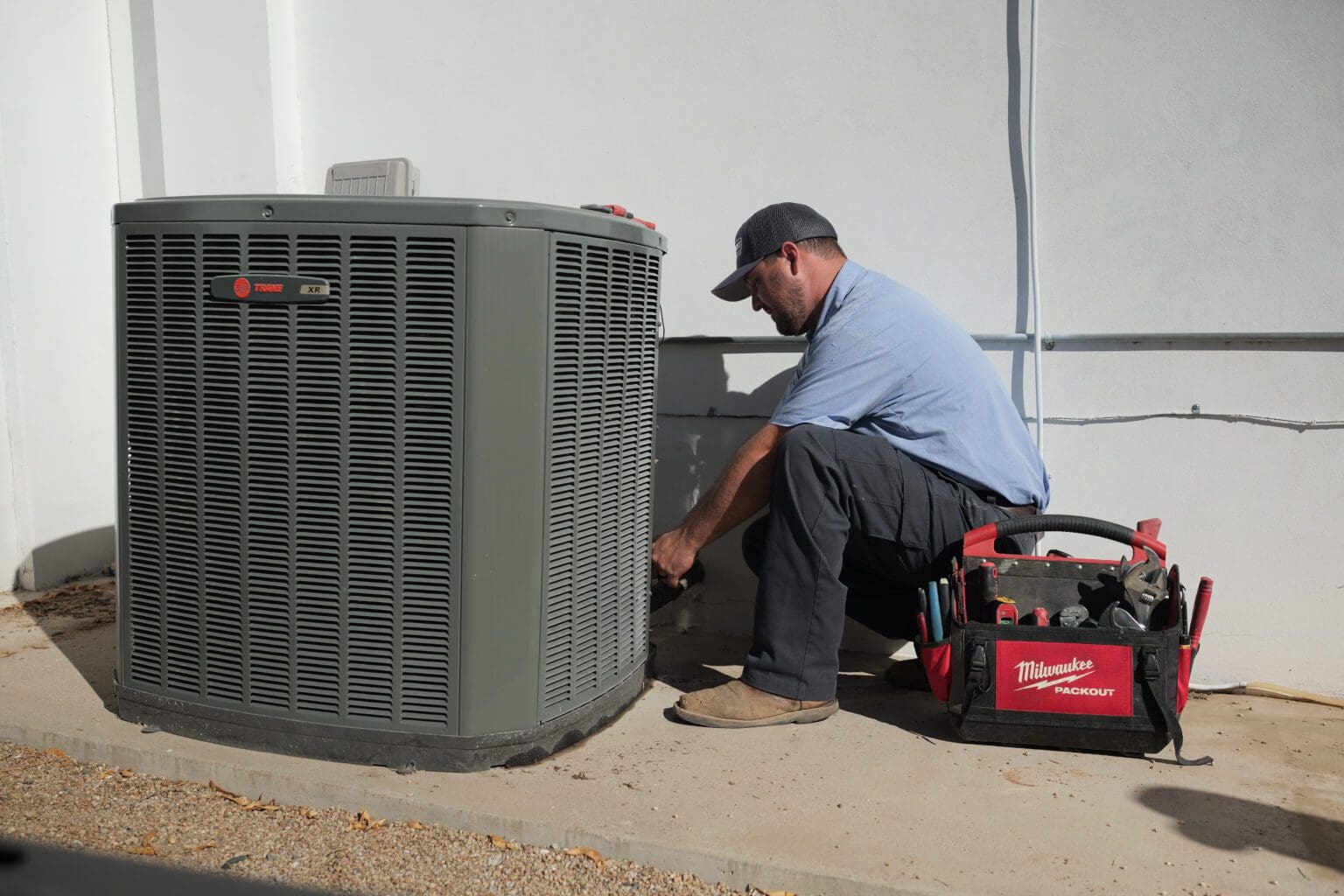
Qualification starts with matched, documented performance. The IRS, ENERGY STAR, and local utilities rely on ratings published through the Air-Conditioning, Heating, and Refrigeration Institute (AHRI). The outdoor unit, indoor coil or air handler, and sometimes the furnace must form a listed combination. Day & Night uses AHRI-matched equipment to avoid guesswork and provides the certificate at install closeout. This certificate links the condenser, evaporator coil, and blower to the tested SEER2, EER2, and HSPF2 performance.
The Southwest region, which includes Phoenix and the broader Maricopa County area, places particular weight on EER2 because it measures efficiency at high outdoor temperatures relevant to the Valley of the Sun. Many qualifying systems use variable-speed compressors and variable-speed blowers to hold capacity and comfort in 110-plus heat. Proper airflow and charge are critical to reach the published ratings. The install must support adequate return and supply, correct line set sizing, and clean condensate management to protect the evaporator coil and air handler.
Minimum standards and SEER2 compliance
Federal minimums changed with SEER2. In the Southwest region, the minimum for central air conditioners is higher than in some other regions and includes an EER2 component. Heat pumps have national minimums. Qualifying for utility rebates and tax credits usually requires efficiency levels above those minimums. Day & Night selects equipment that meets or exceeds Southwest standards and provides documentation to satisfy APS and SRP program rules, as well as any ENERGY STAR criteria that apply to the claim.
Permits and code compliance in the City of Phoenix
Mechanical replacements in Phoenix require proper permits. Many projects involve both mechanical and electrical scopes, especially rooftop crane lifts or service disconnect changes. Day & Night secures permits with the City of Phoenix or the relevant jurisdiction and schedules inspections. Installers follow International Mechanical Code and manufacturer installation instructions, paying close attention to clearances, refrigerant line insulation, proper pad or mounting system, and roof curb details for RTUs. Code compliance is a common checkbox for utility rebate programs and is a fundamental part of safe operation.
How the equipment choice affects incentives and comfort
Efficiency tiers tie to actual components. Performance gains usually come from variable-speed compressors, variable-speed blowers, and controls that modulate capacity as the load changes. In Phoenix, this reduces hot and cold spots and lowers on-peak strain. The evaporator coil and condenser coil pair must be matched. Line set diameter must meet the compressor’s requirements. A thermostatic expansion valve or electronic expansion valve supports stable superheat and subcooling under high ambient conditions. The thermostat, often a smart or advanced programmable model, coordinates staging and may unlock a utility program bonus.
In older Arcadia ranch homes near Camelback Mountain and the Desert Botanical Garden, ductwork can be undersized or leaky. High-efficiency equipment will not meet its rating with restricted airflow. Day & Night measures total external static pressure and corrects issues by resizing return drops, adding supply runs, sealing connectors, and balancing flows. This is not just comfort work. APS and SRP commonly require airflow verification and duct performance improvements for higher-tier rebates.
Newer homes in Desert Ridge, Paradise Valley Village, and North Mountain have tighter envelopes and different roof exposures. West-facing glazing and attic ventilation change sensible loads. Manual J load calculations capture those microclimate factors, including near South Mountain Park where evening downdrafts can alter nighttime temperatures. Proper sizing prevents short cycling, allows dehumidification during monsoon patterns, and qualifies the installation for utility programs that check against over-sizing.
Equipment types that frequently qualify in the Valley
Central air conditioners remain common across Phoenix zip codes 85050 and 85085. Heat pumps are gaining share due to the 25C credit and their strong part-load performance. Ductless mini-split systems from Mitsubishi Electric and Daikin work well for garages, home offices, or additions where ducts are impractical. Zoned cooling systems in larger Biltmore or Paradise Valley Village homes use variable-speed air handlers with zone dampers and thermostats to match capacity to space-by-space demand. Commercial rooftops in downtown corridors near Chase Field and Phoenix Sky Harbor International Airport often upgrade to high-efficiency packaged units with economizers for shoulder season savings.
Day & Night installs brands trusted for desert durability: Trane, Carrier, Lennox, Goodman, Rheem, York, Daikin, Mitsubishi Electric, and American Standard. The team confirms AHRI matches for every installed pairing and stores those records with the job file for rebate submission. Many systems carry 10-year parts warranties when registered on time, and extended labor coverage is available. Flexible financing helps homeowners in 85044 or 85021 move forward without delay while waiting for rebate checks or applying the federal tax credit at filing.
What inspectors and rebate programs look for on Phoenix installs
Several technical checks recur across Phoenix inspections and utility rebate verifications. Airflow must be within a standard band, typically around 350 to 450 CFM per ton for many systems, subject to manufacturer tables and dehumidification goals. Static pressure should be within equipment limits. Refrigerant charge must meet superheat or subcooling targets at design conditions. Line sets require proper diameter, correct brazing procedures with nitrogen flow, and clean evacuation down to target microns verified by a gauge that holds under standing vacuum. Condensate lines need proper trap and slope, and secondary drain protection is a must where an overflow could damage property. Electrical connections should show correct wire sizing, breaker protection, and a working service disconnect. These details protect warranty, efficiency, and safety while satisfying both code and rebate program audits.
Common scenarios in Phoenix homes and how incentives apply
Arcadia ranch with hot rear bedrooms and an R-22 system
This home near Camelback Mountain uses a mid-2000s split-system AC with a single-stage compressor. Utility bills have climbed, and rear rooms stay warm in late afternoon. An upgrade to a high-efficiency heat pump with a variable-speed blower reduces temperature swings and qualifies for the federal 25C credit if the rating meets the criteria. Duct sealing, a larger return, and a smart thermostat help meet APS or SRP rebate requirements for airflow and controls. The AHRI certificate and commissioning data go into the rebate packet. The homeowner files Form 5695 with the tax return using the model numbers and invoices Day & Night provides.
Desert Ridge two-story with short cycling and humidity swings
Newer construction in 85050 uses a 4-ton split system that short cycles on mild days and struggles in July. Manual J shows actual load near 3.2 to 3.5 tons when ducts and infiltration are corrected. A variable-capacity heat pump sized to the calculated load stabilizes operation, improves part-load efficiency, and often meets the thresholds for utility rebates. Because the home sits in the North Phoenix corridor, SRP rebate requirements on airflow and duct leakage shape the scope. The final invoice reflects equipment, duct improvements, and program discounts. The owner gets guidance on thermostat programming to reduce on-peak demand.
Moon Valley single-story with frequent repairs
An aging condenser has had a compressor replacement and multiple capacitor failures. The coil shows corrosion, and the line set is undersized for the proposed new equipment. Replacing the entire matched system including the evaporator coil and correcting the line set unlocks efficiency and reliability. This full system path usually earns better rebate outcomes than a partial swap. The homeowner also stops spending on incremental repairs that do not address the root cause.
Small commercial suite near Phoenix Sky Harbor International Airport
A rooftop unit serving a retail space cycles at full capacity against a small load. A high-efficiency packaged rooftop unit with staged or variable compression improves comfort and lowers demand charges. Commissioning includes economizer setup for shoulder seasons and verifying EER2 performance. Utility rebates can apply, and the property manager’s accounting team reviews potential deductions with their tax advisor. Day & Night provides the AHRI documentation, start-up sheets, and balancing notes needed for the application.
What paperwork matters for rebates and credits
Rebates and credits are paperwork-driven. The equipment invoice must show model numbers. The AHRI Certificate ties the installed indoor and outdoor components to the published efficiency. Photos or upload forms may confirm serial numbers. Utility programs often ask for commissioning data such as measured static pressure, CFM per ton, and refrigerant readings. For the federal credit, homeowners include Form 5695 with the tax return and keep supporting documents with their records. Day & Night packages the install folder so the homeowner or property manager can submit with confidence. If the home is in 85018 or 85016 where remodels are common, permit final approval notices become part of the file.
A quick qualification checklist for Phoenix, AZ
The items below summarize the core requirements homeowners and small commercial owners keep in mind. Day & Night verifies each point during the site visit and proposal phase.
- AHRI-matched system with documented SEER2, EER2, and HSPF2 ratings suitable for the Southwest region
- Manual J load calculation to avoid oversizing and to satisfy program rules
- Permits pulled for the City of Phoenix or local jurisdiction, with passed inspections
- Commissioning records: airflow, static pressure, refrigerant charge, thermostat configuration
- Complete invoice, model numbers, and, if required, photos for rebate portals and IRS substantiation
How Day & Night designs for Phoenix heat and program rules
Engineering the installation starts at the load calculation. Manual J incorporates square footage, insulation values, window orientation, infiltration, and duct location. Phoenix homes with ducts in attics near South Mountain Park or Biltmore see higher sensible loads in late afternoon. The team then evaluates ducts with static pressure readings and visual inspections. If the variable-speed blower needs 400 CFM per ton and the return path cannot provide it, the system will be loud, inefficient, and harder to commission. The proposal includes duct corrections where needed so the final install hits the rated efficiency. This step is critical for utility rebates that require airflow proof.
Equipment selection weighs both SEER2 and EER2. In Phoenix, a high SEER2 unit that does not hold a strong EER2 at high temperature may fail to deliver bill savings on the hottest days. Variable-speed compressors help because they modulate capacity to match the load curve across the day. Smart thermostats help shift starts and pre-cool spaces before peak windows. Zoning can isolate upstairs loads in two-story homes in the 85085 area while keeping the downstairs stable. Ductless mini-split heads add capacity to a west-facing office without rebuilding the entire duct system, and many models qualify for incentives when rated accordingly.
Permitting and rooftop logistics across Phoenix neighborhoods
Central air replacements on the ground usually involve pad stabilization, precise copper line set runs, and careful routing around landscaping. Rooftop replacements in Midtown, Downtown near Chase Field, or commercial strips around Camelback Road require crane coordination, curb adapters, and structural checks. The City of Phoenix permit set addresses mechanical, electrical, and sometimes structural details. Day & Night schedules crane picks around traffic restrictions and secures jobsite perimeters. Inspectors often want nameplate photos, disconnect labeling, and condensate routing proofs. Clean documentation helps rebates move faster after final inspection.
How much do homeowners actually save in Phoenix
The combination of the 25C tax credit for qualifying heat pumps, utility rebates from APS or SRP, and seasonal manufacturer promotions can reduce net project cost by hundreds to a few thousand dollars in many cases. Actual savings vary by model, capacity, and home conditions. Some projects in 85032 or 85050 include duct upgrades that raise the rebate amount. Others focus on a heat pump conversion and qualify for the federal credit only. Day & Night runs side-by-side comparisons during the proposal so homeowners see the break-even point against frequent repairs and high demand charges.
Service coverage and neighborhood context
Day & Night serves Phoenix and nearby cities across Maricopa County, including Scottsdale, Tempe, Mesa, Glendale, Peoria, Chandler, and Gilbert. Within Phoenix, common service clusters include Arcadia and Biltmore near the Desert Botanical Garden, Ahwatukee foothills along South Mountain Park, Desert Ridge and North Phoenix around 85050 and 85085, and established areas like Moon Valley and Paradise Valley Village. Proximity to Phoenix Sky Harbor International Airport can increase rooftop logistics planning. The team schedules work around community guidelines and HOA requirements where needed, and provides insurance certificates on request for multifamily and commercial properties.
Brands, components, and parts that appear in rebate-qualified systems
Rebate-qualified systems across Phoenix lean on proven components. Compressors are often variable-speed inverter designs. Evaporator and condenser coils use corrosion-resistant materials suitable for dust and high heat. Air handlers with variable-speed blowers regulate airflow precisely across temperature swings. Thermostats integrate with utility demand programs and allow staged cooling. Installations include matched copper line sets, secured drain pans with float protection, and stable pads or rooftop mounting systems. Day & Night specifies Trane, Carrier, Lennox, Goodman, Rheem, York, Daikin, Mitsubishi Electric, and American Standard systems when the performance, warranty, and parts availability align with mission-critical desert uptime.
What happens to older R-22 systems in Phoenix
R-22 refrigerant is obsolete and costly. Many Phoenix systems over 10 to 15 years old carry R-22 components with coils past their best years. Repairs on these units often fail a basic return-on-investment test in the Valley’s heat load. Replacing with a modern, SEER2 compliant heat pump or split AC unit reduces electricity use, improves comfort, and opens the door to credits and rebates. Homeowners in 85021 or 85044 who face frequent repairs typically shift to replacement once labor and parts exceed 20 to 30 percent of the cost of a new system, especially before another peak cooling season begins.
Two focused examples: what the paperwork package looks like
Residential split heat pump in 85018
The homeowner selects a variable-speed heat pump that meets ENERGY STAR criteria for the tax credit and satisfies APS rebate levels. Day & Night performs Manual J, seals ducts, and commissions to airflow. The closeout package includes the signed invoice with model numbers, the AHRI certificate, commissioning sheet with static pressure and CFM per ton, permit numbers with final inspection, and utility program forms. The client files Form 5695 with the next tax return and receives the APS rebate directly from the utility after portal approval.
Commercial RTU near Downtown Phoenix
The property owner replaces an aging rooftop unit with a high-efficiency packaged system using staged compression and an economizer. Day & Night manages crane logistics and roof curb adapter sizing. Commissioning verifies temperature split, EER2 performance under load, and economizer operation. The packet includes invoice, AHRI reference, startup forms, and utility rebate submission. The owner’s tax advisor reviews potential deductions based on the project scope. The utility rebate arrives once the application passes review.
Avoiding the pitfalls that cause rebate denials
Most denials trace back to mismatched equipment, missing AHRI documentation, or airflow readings outside acceptable bands. Oversized systems are another common issue. They cycle off too fast, leaving humidity high during monsoon weeks and failing to hit tested efficiency. In Phoenix neighborhoods like Arcadia with older ducts, ignoring return restrictions undermines a variable-speed blower. Day & Night prevents these problems with pre-job load calcs, duct assessments, and on-site commissioning that meets utility specs. If a program requires third-party verification, the team coordinates access and provides data logs in advance.
How ac installation service Phoenix queries connect to incentives
People searching for ac installation service Phoenix are usually facing an aging AC unit, high utility bills, or frequent repairs in July and August. They want fast installation, solid engineering, and a clear number after rebates and credits. Day & Night answers that need with NATE-certified installers, Manual J calculations, and SEER2 compliant equipment from trusted brands. The proposal outlines the net price after APS or SRP rebates and any available manufacturer offers. It also explains federal tax credit eligibility and provides the paperwork needed for the tax preparer. This is the practical path to a cooler home in the Valley and a lower monthly bill. It also positions the system well for Google Map Pack trust signals because the company’s process shows local code compliance, ROC licensing, and consistent service across Phoenix zip codes like 85032, 85050, and 85085.
Step-by-step: claim credits and rebates the right way
Timing and documentation make the difference. Homeowners and property managers in Phoenix can use this brief sequence to keep the process simple while Day & Night handles the technical work and submittals.
- Schedule a load calculation and duct evaluation to define the right capacity and airflow target
- Select an AHRI-matched system that meets SEER2 and EER2 thresholds for the Southwest region
- Complete permitted installation, commissioning, and city inspection in Phoenix or the relevant jurisdiction
- Submit the utility rebate packet with invoice, AHRI certificate, and commissioning data within the program window
- File IRS Form 5695 with model numbers and invoices for the Section 25C credit if the equipment qualifies
Why Day & Night qualifies as a trusted installer in Phoenix
The company’s installers are NATE-certified. The business is licensed, bonded, and insured under Arizona ROC #133378. The team uses Manual J load calculations on every HVAC replacement and documents commissioning to utility standards. Installers are trained on variable-speed compressors, inverter drive diagnostics, and airflow balancing. The company’s service map covers Phoenix neighborhoods from Ahwatukee to North Mountain, with frequent work in Arcadia, Biltmore, Desert Ridge, Moon Valley, and Paradise Valley Village. Clients receive clear proposals with financing options, expected rebate amounts, and warranty details up to 10 years on parts for many brands when registered.
A note on timing and seasonality in the Valley of the Sun
Rebate funds and manufacturer promotions can change seasonally. Late spring and early summer bring high demand. Schedules fill quickly across Maricopa County once temperatures push past 105 degrees. Homeowners in 85018 and 85016 often plan replacements in spring to avoid emergency downtime and to capture current incentives. During monsoon months, electrical safety and surge protection also matter. Day & Night advises on surge devices and thermostats that ride through disruptions, protecting the compressor and controls from voltage swings.
Answering two frequent questions
Will a high SEER2 system actually lower my APS or SRP bill in Phoenix heat
Yes, when installed as a matched AHRI system with proper airflow and charge. Day & Night sees the biggest drops in homes moving from single-stage, R-22 era equipment to variable-speed heat pumps. Savings depend on usage patterns, setpoints, duct conditions, and roof or attic exposure. The proposal can estimate impact based on historical kilowatt-hours and the new system’s EER2 performance at high ambient temperatures typical for Phoenix.
Is ductless a good way to qualify for incentives
Often, yes. Ductless mini-splits from Mitsubishi Electric or Daikin can reach high efficiencies and qualify for rebates and credits when the rating meets the threshold. They also solve tough rooms like a west-facing home office or garage conversion in 85050 without extensive duct modifications. Day & Night verifies AHRI matches and files the same way as with central systems, with commissioning data and model numbers documented.
Controlled service positioning for Phoenix clients
Day & Night focuses on AC Installation, HVAC Replacement, Air Conditioning System Design, Central Air Installation, Ductless Mini-Split Installation, Energy-Efficient Cooling, and Commercial HVAC Replacement. The company specializes in split-system central air conditioners, heat pumps, packaged rooftop units, and zoned cooling systems. Installations include high-efficiency compressors, variable-speed air handlers, smart thermostats, and complete copper line sets. Each project is sized, permitted, and commissioned for the Phoenix climate with SEER2 compliance as standard practice. This discipline keeps eligibility for rebates and tax credits intact while delivering even temperatures and better indoor air quality.
Clear conversion signals for homeowners and property managers
Ready for a cooler home and lower bills during a Phoenix summer. Day & Night provides ac installation service Phoenix residents and businesses can rely on, with fast scheduling across 85032, 85050, 85085, 85044, 85021, 85018, and 85016. Ask about flexible financing, current APS and SRP rebates, and whether a high-efficiency heat pump qualifies for the federal 25C tax credit. The team will run a Manual J, confirm AHRI matches, pull permits, and deliver a complete rebate-ready package. Call Day & Night Air Conditioning, Heating, & Plumbing or request a visit online to get a written quote that shows your net price after incentives. Arizona ROC #133378. NATE-certified installers. SEER2 compliant systems sized for Phoenix heat. Factory-authorized options from Trane, Carrier, Lennox, Goodman, Rheem, York, Daikin, Mitsubishi Electric, and American Standard.
Day & Night Air Conditioning, Heating & Plumbing 3669 E La Salle St,
Phoenix, AZ 85040 (602) 584-7758 www.dayandnightair.com AZ Licenses: ROC335883 | ROC335884 Google Maps | Facebook | Instagram | LinkedIn